
The Back-to-School Budget Checklist: 10 Expenses Every Student Should Plan For
Tools mentioned in this article: PRSVRE Budget Builder
September gets expensive fast.
Tuition and rent are obvious. But then the textbook charges hit. Your first grocery run costs more than expected. A few subscriptions renew. Your friends want to go out Friday. And if you're a student-athlete, you might have an entirely separate list of costs connected to your season.
None of those expenses necessarily seem significant on their own. Together, they can completely change what your month looks like financially.
That's why a useful student budget isn't about predicting every dollar you'll spend. It's about getting an honest picture of the expenses you're likely to face before they start piling up.
Before the school year gets into full swing, here are 10 things worth accounting for.
1. Tuition and School Fees
Start with the expense you probably already know is coming.
But don't just look at the advertised cost of tuition. Check your actual student account and understand what you're responsible for paying, what has already been covered and when your remaining payments are due.
Depending on your school, you may also see additional charges for student services, athletics and recreation, health or dental coverage, transit programs and other mandatory fees.
If scholarships, grants, financial aid or student loans are covering part of your costs, separate that from the amount you'll need to cover yourself.
The number that matters for your budget isn't what university costs on paper. It's what university is going to cost you.
2. Housing — Including the Costs Beyond Rent
Whether you're living in residence or renting off-campus, housing will probably take up a significant part of your budget.
If you're renting, remember that your real housing cost may include:
Utilities
Internet
Tenant insurance
Laundry
Parking
Household supplies
Residence students should also understand what's included in their fees and what they'll still need to buy themselves.
September can also come with one-time purchases—bedding, kitchen supplies, storage or other essentials—that make your first month more expensive than the months that follow.
Budget for the cost of living somewhere, not just the cost of the room.
3. Food
Food is one of the easiest categories to underestimate because the spending happens everywhere.
Groceries. Coffee. Lunch between classes. Food after practice. Takeout because you got home late and cooking isn't happening.
If you have a meal plan, know what it actually covers. You may still need money for snacks, groceries and meals away from campus. If you're buying groceries yourself, start with a realistic weekly amount and adjust it after you've seen a few weeks of actual spending.
Most importantly, be honest.
If you know you're going to grab food after practice twice a week, pretending your takeout budget is $0 isn't budgeting. It's wishful thinking.
Build your budget around how you actually live.
4. Textbooks, Course Materials and School Supplies
Your syllabus can introduce an entirely new list of expenses.
Depending on your program, you might need textbooks, access codes, lab materials, software, equipment or other course-specific supplies.
Before buying everything immediately, check what your course actually requires and whether legitimate lower-cost options like used copies, rentals or library access are available.
You might not know every cost before classes begin, so leave some room in your September budget for school expenses that haven't appeared yet.
It's easier to adjust money you've already set aside than to discover an unexpected course expense after you've spent it somewhere else.
5. Transportation
Think beyond simply getting to campus.
You might also need to get to practice, work, the grocery store and home on weekends.
Depending on your situation, that could mean transit, gas, parking, rideshares or other transportation costs. If your student fees already include a transit pass, know what's covered before budgeting for it separately.
And watch the convenience spending. One rideshare probably won't destroy your budget. Turning it into a habit several times a week is a very different story.
6. Phone, Technology and Subscriptions
This is the money that quietly leaves your account every month.
Think phone plans, cloud storage, music and video streaming, gaming subscriptions, software and paid apps.
Look through your recent transactions and identify everything that automatically renews.
A $10 subscription doesn't feel particularly expensive. Six of them suddenly means $60 leaving your account every month.
Back-to-school is a good time to ask:
Do I actually use this enough to keep paying for it?
If the answer is no, cancel it.
7. Social Spending
Yes, having fun belongs in your budget.
A budget that assumes you're never going to restaurants, grabbing coffee, attending events or going out with friends probably isn't going to survive September.
The goal isn't to remove everything enjoyable. It's to decide how much you can comfortably spend before you're in the moment.
Give yourself a realistic amount for restaurants, entertainment, dates, nights out and those random weekend plans you know are going to happen.
A realistic budget should give you permission to spend money you've intentionally set aside for fun—without wondering afterward whether you could actually afford it.
8. Student-Athlete Expenses
This is where a traditional student budget can miss part of the picture.
Being a student-athlete can introduce expenses that don't always show up in a standard budgeting template.
What you personally pay for will vary depending on your sport, school and what your athletic program covers, but your costs might include:
Team Fees
Training gear or personal equipment
Additional food and snacks
Recovery products
Team-related expenses
Transportation or travel-related costs (if you’re sport is self-funded)
Don't assume something will be covered simply because it's connected to your sport. Understand what your program provides and what you're responsible for yourself.
Your spending may also change throughout the year. An in-season budget could look different from an offseason budget, especially if competition changes your food, transportation, travel or work schedule.
Plan for the season you're actually in.
9. Unexpected Expenses
Something is going to happen that isn't in your spreadsheet.
Your charger dies. You need something from the pharmacy. Your winter boots finally give up. Something you didn't know you needed suddenly costs $50.
You can't predict every unexpected expense, but you can leave yourself some breathing room.
That doesn't mean you need a massive emergency fund before your first lecture. Even a small buffer can prevent an unexpected purchase from taking money away from something important later in the month.
The important thing is simple:
Don't budget every available dollar down to zero.
10. The Stuff You Know You're Going to Buy Anyway
This might be the most important item on the list.
Everyone has something.
Coffee. Sneakers. Takeout. Concerts. Clothes. Gaming.
Whatever yours is, don't magically remove it from your financial life when you create a budget.
If you normally spend $100 on something every month and your new budget suddenly says you're going to spend $0, ask yourself whether you've actually decided to change that habit—or whether you've created a budget for an imaginary version of yourself.
There's nothing wrong with spending money on things you enjoy if you can afford them.
Account for them.
A good budget shouldn't represent the most financially disciplined version of yourself imaginable.
It should represent you.
Before Classes Get Busy, Build Your Budget
You don't need a perfect financial plan as the semester starts.
You just need to know:
What's coming in?
What's going out?
What expenses are coming later?
And how much do you have left?
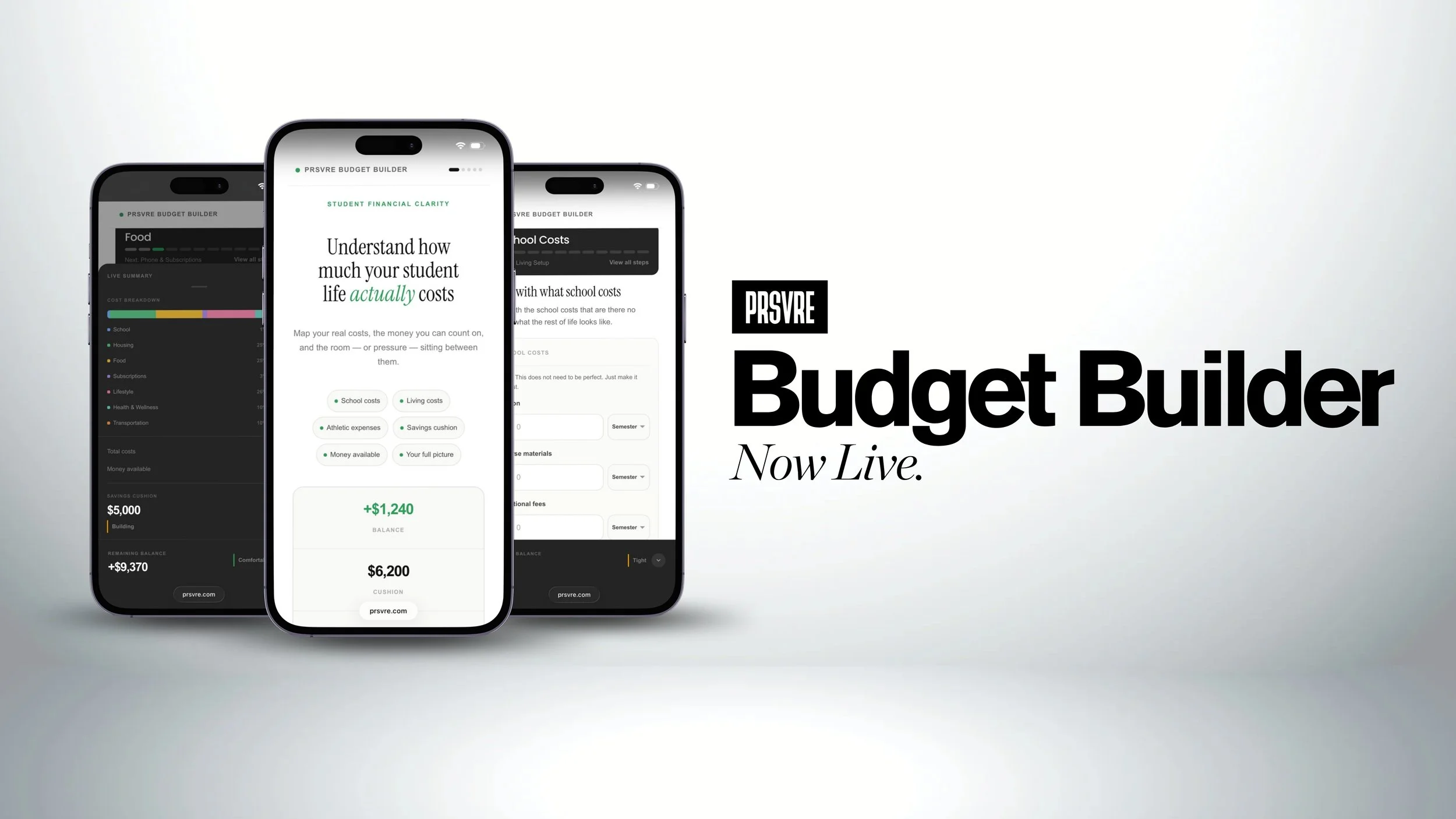
That's exactly why we built the PRSVRE Budget Builder.
It's a free budgeting resource designed for university students, with the ability to account for the additional expenses that can come with being a student-athlete.
Take a few minutes, enter your expected income and expenses, and get a clearer picture of what your semester could look like financially.
Back-to-School Budget Checklist
Before you're done, make sure you've accounted for:
☐ Tuition and school fees
☐ Rent or residence
☐ Utilities and internet
☐ Groceries / meal plan
☐ Textbooks and course materials
☐ Transportation
☐ Phone and subscriptions
☐ Social spending
☐ Student-athlete expenses, if applicable
☐ Personal expenses
☐ Unexpected expenses / buffer
☐ Savings and incomes, if possible
If you can check every box, you're already starting the semester with a much clearer picture of your money.